


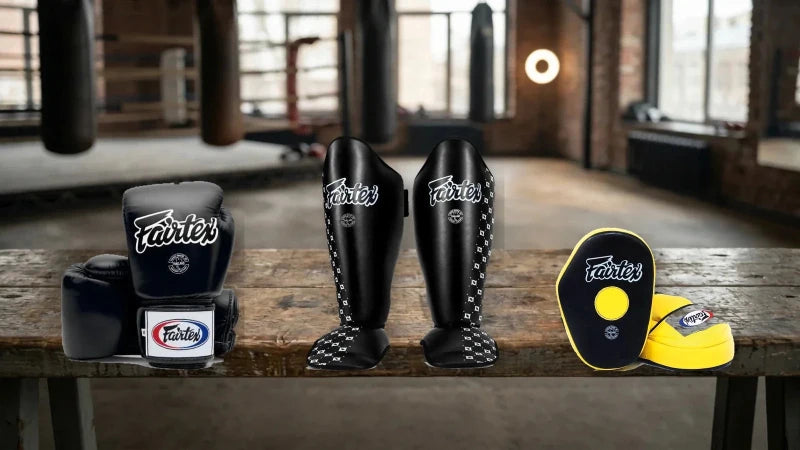
The right first purchase is not the biggest pile of gear. It is the exact kit your coach expects for the class on your schedule.
Boxing, Muay Thai, MMA and BJJ overlap, but they do not use one universal checklist. Start with the gym’s rules. Buy personal-contact items first. Add specialist equipment when the training actually calls for it. The combat-sport gear guide by discipline expands this into sport-specific clothing and accessory decisions.
The short answer: what do you need first?
| Training | Bring first | Add when the coach says |
|---|---|---|
| Boxing | Boxing gloves, hand wraps, mouthguard | Headgear and groin or chest protection for partner work |
| Muay Thai or kickboxing | Gloves, hand wraps, mouthguard | Shin guards, groin protection, headgear or elbow pads for the gym’s sparring format |
| MMA | MMA gloves specified by the class, mouthguard, fitted training clothes | Boxing gloves for striking rounds, shin guards and groin protection |
| BJJ | Gi or no-gi uniform required by the class, water bottle, sandals off the mat | Mouthguard, ear guards or joint supports based on personal need and gym rules |
Competition is a separate purchase decision. Governing bodies, promoters and local commissions can require different equipment from your regular class. Check the event packet before buying “competition approved” gear. For children and teens, use the separate youth combat-sport gear checklist instead of shrinking an adult list.
Build a boxing kit
Your gloves and wraps need to work together. Choose glove weight for the training job and gym rule, then check fit with your normal wraps on. Our beginner boxing-glove guide covers the model decision, while the glove-weight guide separates ounces from hand size. The hand wrap types and length guide covers the layer underneath.
A mouthguard belongs in the bag before live partner work. Use the combat-sport mouthguard guide for fit and replacement checks. Headgear may also be required, but it is not a concussion-proof helmet; the combat-sport headgear guide explains the coverage and visibility tradeoffs.
Build a Muay Thai or kickboxing kit
Start with gloves, wraps and a mouthguard. Add shin guards when the class moves into checked kicks, partner drills or sparring. A guard that floats around the calf is the wrong size even if the label matches another brand you own. Measure, use the product chart and test the straps in stance.
Use the shin-guard sizing and selection guide before comparing current shin guards. Pads, mitts and belly pads are usually gym or coach equipment, not the first items a new student needs to own.
For coach-held punch targets, start with the focus mitt buying guide. If kicks and knees enter the drill, use the focus mitts versus Thai pads comparison before choosing the target.
The kick and Thai pad guide covers forearm targets and shields. Use the belly pad selection guide when body shots and knees are the specific job.
For a complete personal kit rather than one pad, compare the Muay Thai brands and gear guide. The current Fairtex gear review is the narrower next step when Fairtex is already on the shortlist.
Build an MMA kit
“MMA class” can mean striking, wrestling, grappling or a mixed session. Ask which glove the coach wants. Open-finger competition-style gloves are not a substitute for padded boxing gloves in every striking drill, and boxing gloves do not allow normal grappling.
Start with the class-specific gloves, a mouthguard and pocket-free training clothes. Add shin guards and groin protection as required. See the MMA glove guide before choosing a pair by appearance alone.
Build a BJJ kit
For gi class, bring the gi and belt your academy permits. For no-gi, use a fitted rash guard and grappling shorts without loose hardware or pockets. The complete BJJ gear guide and no-gi checklist cover the details.
A mouthguard or ear guard can be useful, but the academy and competition rules still control. Do not assume a training-room item will pass inspection at an event.
Fit is part of the equipment
- Gloves: put them on over the wraps you train in. Check that you can make a fist without numbness, pinching or loose rotation.
- Headgear: shake your head, look left and right, and move in stance. It should not cover your eyes or spin after light contact.
- Shin guards: line the main pad up with the shin and the instep pad with the top of the foot. Straps should hold without cutting circulation.
- Mouthguard: it should stay in place without constant clenching and should not block normal breathing. Follow the maker’s fitting steps.
Pain, tingling, blue or pale fingers, blocked vision and gear that will not stay put are not “break-in.” Stop and refit.
What protective gear can and cannot do
Protective equipment manages specific contact. It does not make hard sparring harmless. The Association of Ringside Physicians says headguards should not be relied on to reduce concussion or traumatic-brain-injury risk. The American Dental Association supports properly fitted mouthguards for reducing oral injury, while noting that evidence on concussion reduction is mixed.
Technique, partner control, coaching, rules and session intensity still matter. Gear is one layer, not permission to ignore the others.
Keep the kit usable
Empty the bag after class. Air out gloves and guards. Wash wraps and training clothes according to their labels. Wipe non-washable surfaces with a material-compatible product, then let everything dry before repacking. The protective-gear care guide gives the full routine.
Buy in this order
- Ask the coach for the first-class and sparring requirements.
- Buy personal hygiene and contact items: mouthguard, wraps, training clothes.
- Choose the correct glove for the class, not a vague “all-purpose” label.
- Add shin guards, headgear and other protection only when the training format needs them.
- Check event rules again before competition.
Ready to build the striking side of the kit? Start with current boxing and Muay Thai gloves and hand wraps, then match the rest to your gym.
Personal gear, shared gear and coach gear
Separating these categories keeps the first purchase sensible. Wraps, mouthguards, uniforms and regularly used gloves should normally be personal. A gym may lend gloves for a trial class, but repeated use makes your own correctly fitted pair easier to manage and clean. Thai pads, focus mitts, belly pads and heavy bags are normally gym or coach equipment unless you are building a home setup.
Ask what the gym lends and how it is cleaned. “Available at the gym” does not always mean available in your size, available for every class or intended as a permanent solution. The goal is not to own everything. It is to remove the equipment bottleneck that could stop you training.
A two-stage buying plan
Before the first month
Buy only what the class requires and what should not be shared: training clothing, wraps where applicable, a mouthguard for contact work and the exact glove or uniform the coach specifies. Keep the receipt and packaging until the clean fit check is complete.
After the schedule becomes real
Add a second washable item when turnaround becomes a problem. Add shin guards when partner kick drills begin. Add a dedicated sparring glove only when the gym's sparring format justifies it. Add a bag or home target only when you know where it can be mounted, how noise will travel and what you plan to drill.
Where beginners overspend
- Matching before fitting: buying gloves, guards and clothing as one visual set before any item has passed a movement test.
- Competition before training: buying event-specific equipment before an event or ruleset is confirmed.
- Protection by marketing adjective: treating “pro,” “max” or “advanced” as a verified safety rating.
- One glove for incompatible jobs: forcing a dense bag glove into regular partner sparring because it was the first purchase.
- Storage last: buying expensive gear without a routine to dry it after every session.
A complete kit is not the one with the most pieces. It is the smallest system that lets you train, clean the equipment and return with everything ready for the next class.
Sources and rule checks
- Association of Ringside Physicians headguard position statement: Headguards should not be relied on to reduce concussion or traumatic-brain-injury risk.
- American Dental Association mouthguard guidance: Properly fitted mouthguards reduce the incidence and severity of oral injury; concussion evidence is mixed.
- World Boxing Competition Rules: Competition equipment, hand-wrap and headguard requirements vary by age and event category.
- Association of Boxing Commissions Muay Thai rules: The presiding commission controls required gear; the rules specify mouthpiece, glove and hand-wrap requirements.