


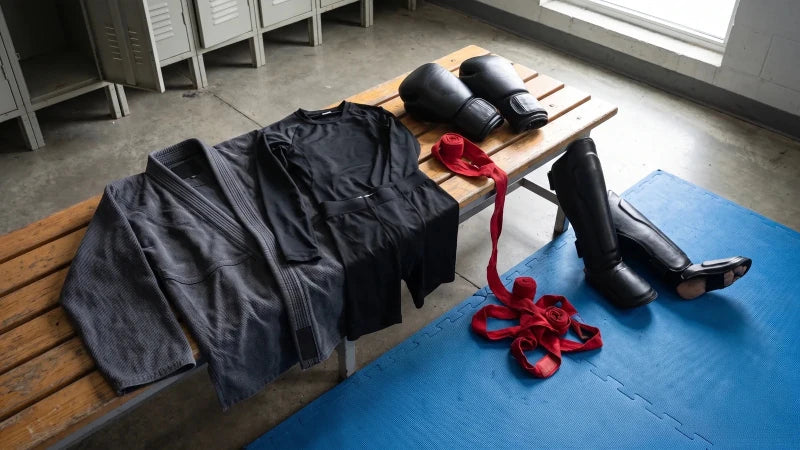
The right martial arts gear depends on the class. A boxing beginner does not need a gi. A new BJJ student does not need boxing gloves. And almost nobody needs to buy every item before the first session.
Call the gym before you shop. Ask what you can borrow, what the coach requires and whether the class is technical, bag-based, grappling or contact sparring. That one call prevents more bad purchases than any universal checklist.
Martial arts gear checklist by sport
| Sport | What to wear | Core personal gear | Common next purchase |
|---|---|---|---|
| Boxing | Athletic shirt and shorts; boxing shoes only if the gym or training calls for them | Hand wraps, boxing gloves and mouthguard | Headgear or groin/chest protection when the coach requires sparring gear |
| Muay Thai / kickboxing | Muay Thai shorts or flexible training shorts and a light top | Hand wraps, gloves and mouthguard | Shin guards and groin protection for partner drills or sparring |
| MMA | Rashguard or fitted top with grappling shorts | Mouthguard plus the glove type your coach names for the session | Shin guards and separate striking gloves for training outside MMA-glove work |
| Gi BJJ | Jiu-jitsu gi and belt | Properly fitted gi; mouthguard if you choose to use one | Second gi once training frequency makes laundry the bottleneck |
| No-gi BJJ | Rashguard and grappling shorts or spats that meet gym/tournament rules | Close-fitting training apparel without hard pockets, zips or loose hardware | Second rashguard and shorts set |
This is a starting list, not a rulebook. Your gym and event organizer control what is allowed.
Boxing gear for beginners
Start with wraps, gloves and a mouthguard. Use the glove weight your coach requires. Ounces describe glove weight, not hand size, so check the hand compartment with the wraps you will wear in class.
- Hand wraps help manage wrist and knuckle support inside the glove.
- Boxing gloves must match the job: bag work, pads, mixed training or sparring.
- The YOKKAO mouthguard should fit securely and follow the maker's fitting instructions.
Do not buy a “professional” glove because the name sounds advanced. A professional fighter may use one glove for a sanctioned bout, another for sparring and another for bag work. Our boxing glove guide explains those decisions.
Muay Thai gear for beginners
Muay Thai adds kicking, checking and clinch work to the equipment question. Most beginners still start with wraps, gloves and a mouthguard. Shin guards come next when the class moves into partner drills or sparring.
- Wear shorts that let you lift the knee and rotate the hip without pulling at the thigh.
- Use gloves that suit the session rather than assuming one brand model covers every job.
- Measure for shin guards; do not pick size from height alone when a model provides shin, instep or calf measurements.
- Add groin protection when your gym requires it.
For the brand decision, compare Fairtex, YOKKAO and Twins Special. For the protective fit decision, use the shin-guard guide.
MMA training gear
MMA classes move between striking, wrestling and grappling. That does not mean one glove should cover every segment.
Open-finger MMA gloves allow more grappling movement, but they carry less padding than boxing gloves. Many gyms use larger MMA sparring gloves or boxing gloves for specific partner work. Follow the coach's session rule instead of copying professional fight equipment.
A practical starting kit is a fitted rashguard, grappling shorts, mouthguard and the exact glove type named by the gym. Add shin guards when striking rounds require them. The MMA glove guide separates competition, training and sparring shapes.
What to wear for BJJ
Gi BJJ
A BJJ gi includes a jacket and pants, worn with the correct belt. Fit, sleeve reach, trouser length, fabric weight and shrinkage instructions all matter. A gi can feel comfortable and still fail a tournament measurement.
Use our BJJ gi buyer's guide for fit and fabric. Check the current event rulebook before competition; the IBJJF, for example, publishes uniform colors, measurements and patch-placement requirements.
No-gi BJJ
No-gi training typically uses a fitted rashguard and grappling shorts or spats. Avoid loose pockets, exposed zips and hard hardware that can catch a finger or scratch a partner. Competition color and rank rules vary, so verify the event rather than relying on a generic article.
The no-gi BJJ gear guide covers the current clothing decision without mixing it into the gi rules.
Gear for home striking practice
A heavy bag is not a substitute for coaching, but it can give you a repeatable place to drill. The setup matters as much as the bag.
- Confirm whether the building can carry a hanging load before buying a ceiling mount.
- Leave enough clearance for the bag to swing and for you to move around it.
- Use wraps and appropriate gloves.
- Choose a freestanding option when mounting, noise or tenancy rules make a hanging bag impractical.
Start with the heavy-bag buyer's guide, then read the installation checklist before drilling into a ceiling or wall.
What not to buy first
- A full matching kit before one class. You may discover the gym supplies some equipment or requires a different model.
- A different glove weight because your preferred color is sold out. Color never overrides the training requirement.
- Headgear on a promise that it prevents concussion. Buy the coverage and fit your coach requires without turning it into a medical guarantee.
- Cheap novelty weapons for unsupervised drills. Specialized weapons training belongs with a qualified instructor and the equipment that instructor approves.
- Recovery gadgets sold as necessary martial arts gear. Build the actual training kit first.
How to check fit before training
- Try gloves with your normal wraps.
- Move through a full squat, lunge, hip turn and high knee in your shorts or gi pants.
- Check that shin guards cover the intended area without rotating during basic movement.
- Make sure no zip, buckle, pocket or hard edge can catch a partner.
- Ask the coach to approve sparring equipment before live rounds.
How to care for martial arts gear
Take damp gear out of the bag after class. Air-dry it away from direct heat, follow the material-specific care label and wash clothing after use. Leather, microfiber, gi cotton, foam and mouthguards do not share one universal cleaning method.
Replace equipment when the closure fails, padding shifts or compresses unevenly, the shell splits, hard edges become exposed, or the item no longer fits securely. Condition matters more than a made-up “replace every six months” rule.
Buy the smallest kit that lets you train properly. Add equipment when the class, coach or training frequency creates a real need. Then use the combat-sport gym bag packing guide to keep clean, used and protective gear organized between sessions.
Buy personal gear before gym equipment
New fighters often mix up three different shopping lists: what belongs to the athlete, what the gym normally supplies and what only a coach needs. Your own wraps, mouthguard, clothing and regularly used gloves are personal-contact gear. Thai pads, focus mitts, belly pads and most heavy bags are usually shared training equipment. Unless you coach or train at home, buying the second list before the first is money tied up in gear you may barely use.
The sensible order is personal hygiene first, required class equipment second and specialist equipment third. That means a boxer normally buys clean wraps before a second glove; a Muay Thai student buys properly fitted shin guards before a matching gym bag; and a BJJ student gets the correct uniform before adding casual fightwear.
How much gear do you actually need?
One dependable training set is enough to begin. A second set earns its place when it solves a real constraint: wet wraps that cannot dry between sessions, one glove that cannot responsibly cover bag work and sparring, or a gi that cannot be washed and dried before the next class. Duplicate everything only after your weekly schedule proves the need.
Spend first on fit, construction you can verify and a return path that lets you correct sizing. A cheap item that rotates, pinches or fails the gym rule is not a bargain. A premium item that does the wrong job is not an investment. Compare the exact product description and size chart instead of treating price as a protection score.
Common first-kit questions
Can one pair of gloves cover everything?
Sometimes, for a new athlete doing controlled mixed training. Not always. Dense bag gloves and softer sparring gloves solve different problems. Ask the coach which rounds you will actually do, then use the boxing glove weight guide and the model-specific product page together.
Do you need shoes?
Usually not on boxing, Muay Thai, wrestling or BJJ mats unless the gym specifies wrestling or boxing footwear for a particular session. Never assume outdoor shoes are allowed on a training surface. The gym's hygiene rule wins.
When should you add a larger bag?
When your required gloves, guards, uniform and clean change no longer fit without crushing wet gear together. Buy for the real load, not an imagined future collection. The combat-sports gym-bag guide shows how to test the layout before sizing up.