


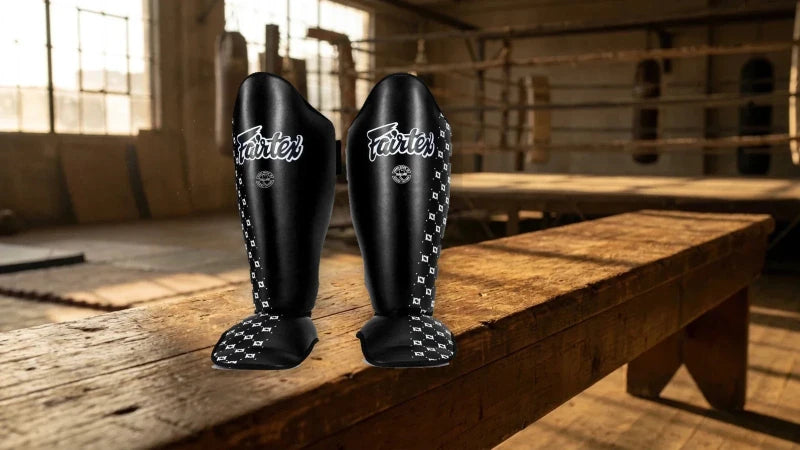
The best shin guards are the pair that stay centered when you check, kick, pivot and reset. Brand reputation matters less than sport, coverage, closure and fit.
For Muay Thai and kickboxing sparring, most gyms use padded guards with shin and instep coverage. MMA sessions may use a slimmer strapped or sleeve-style guard when grappling is part of the round. Your coach and event rules decide the category.
If you are still building the full kit, start with the combat-sports training-gear checklist so shin guards are bought in the right order for the class.
Choose the type before the brand
| Type | Usually suits | Tradeoff to check |
|---|---|---|
| Strapped shin-and-instep guard | Muay Thai and kickboxing drills or sparring | Secure adjustment versus strap pressure and bulk |
| Sleeve or sock-style guard | Mixed striking and grappling movement | Lower profile versus heat, compression and rotation |
| Competition-issued or event-approved guard | Sanctioned amateur formats that specify equipment | Training preference may not matter if the event supplies or mandates gear |
Do not buy from a generic “MMA versus Muay Thai” label alone. A gym may use strapped guards for MMA striking rounds and a different setup for integrated grappling.
How to size shin guards
There is no universal small, medium or large. Use the chart for the exact model and measure where that chart tells you. At minimum, know your shin length and calf circumference; height and weight are only rough proxies.
- Measure from below the knee to above the ankle for usable shin coverage.
- Measure around the widest part of the calf.
- Compare both measurements with the exact product chart.
- Put the guard on with bare feet and the clothing you normally train in.
- Check stance, a slow round kick, a check, a pivot and a sprawl.
The main pad should cover the shin without pressing into the knee. The instep should cover the top of the foot without folding into the toes. Straps should hold the guard without numbness, tingling or deep pressure marks.
The fit test that matters
- Rotation: the center pad stays over the shin after repeated movement.
- Gap: the shin and instep sections do not leave an obvious exposed strip at the ankle.
- Knee clearance: the top edge does not dig in when you bend or check.
- Foot control: the instep does not slide over the toes or interfere with stance.
- Circulation: the straps secure the guard without pins and needles or discoloration.
If you are between sizes, do not assume “size up” is always correct. Compare the missing coverage in the smaller size with the rotation and bulk in the larger one.
Construction: what can be verified
Look for the shell material, foam description, strap layout, interior treatment, foot coverage and size chart on the actual product page. Do not infer protection from a marketing word such as “premium.”
For example, YOKKAO describes its current Matrix shin guards as handmade in Thailand with a cowhide shell, three-layer foam, reinforced straps, a non-slip interior and shin-to-foot coverage. Those are verifiable construction details—not a promise of perfect fit or injury prevention. The official YOKKAO page is the source.
Fairtex also maintains an official shin-guard range. Use the current Fairtex shin-guard collection at MMA Warehouse to see which models are actually available; an official model existing does not mean it is currently stocked here.
Training versus competition
Competition equipment is governed by the event, sanctioning body or commission. Some formats mandate a specific design or supplied equipment. Check the current packet before buying a pair for weigh-in.
The Association of Boxing Commissions Muay Thai rules make the presiding commission authoritative. Your normal training guard may still be the wrong event guard.
Care and replacement
Wipe both sides after training, open the straps and dry the guards fully outside the bag. Follow the care label for washable sleeves or liners. Read the protective-gear care guide for the full routine.
Replace guards when they no longer stay centered, closures fail, padding shifts or bottoms out, hard edges become exposed, or the shell opens across a contact area. Calendar age alone is not enough.
Final buying order
- Confirm the sport, class and coach requirement.
- Choose strapped, sleeve-style or event-specified gear.
- Measure against the exact model chart.
- Test coverage, rotation, knee clearance and circulation.
- Compare verified model details in the live shin-guard collection.
Two current routes worth comparing
| Model | Why it belongs on the shortlist | Fit question to settle |
|---|---|---|
| Fairtex SP5 Muay Thai Shin Guards | A strapped Fairtex shin-and-instep design for conventional Muay Thai training. | Whether the top edge clears your knee and the calf straps stop rotation without over-tightening. |
| YOKKAO Matrix Shin Guards | A current Thai-made cowhide route with a matching Matrix glove option. | Whether the stated shin, instep and calf geometry matches your measurements, not just your height. |
Neither row is a universal winner. SP5 versus Matrix is a model-and-body fit decision. Open both product pages, compare the current charts, then choose the one that covers your shin and instep without turning around your leg.
Why shin guards rotate
Rotation is usually blamed on loose straps, but four things can cause it: the guard is too large, the calf profile is wrong, the instep pulls the lower section sideways, or the straps are being crossed or routed differently from the intended design. Tightening harder can hide the problem briefly and create a circulation problem.
Test the guard dry first, then again after several minutes of movement. Check a kick, a defensive check, a pivot and a light sprawl. If the center line has moved off the shin, reset once. If it keeps moving, the size or geometry is wrong for you.
How much coverage is enough?
The main pad should protect the working length of the shin without pushing into the kneecap. The instep section should sit over the top of the foot without folding into the toes. More surface is useful only while you can still bend the ankle and knee normally.
Do not size down only because a compact guard looks cleaner, and do not size up just to chase maximum coverage. The usable size is the one that stays aligned. For integrated MMA rounds, ask whether the gym wants a slimmer profile that interferes less with grappling; for Muay Thai sparring, confirm whether a conventional strapped shin-and-instep guard is required.
Sources and rule checks
- Association of Boxing Commissions Muay Thai rules: The presiding commission controls required gear; the rules specify mouthpiece, glove and hand-wrap requirements.