


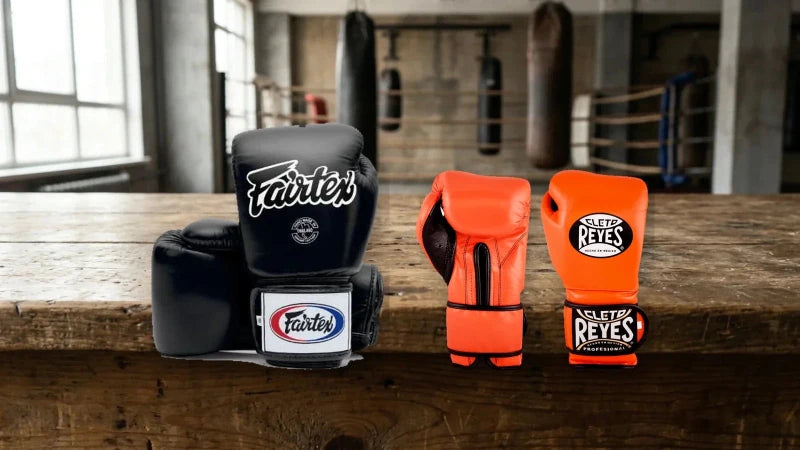
A beginner should buy the glove required for the class they are taking now. Ask whether the sessions use bags, pads, partner sparring or a mix. Get the coach's ounce requirement, then choose a hook-and-loop training glove that fits your wrapped hand without numbness or a bad thumb position.
| Beginner situation | Best first route | Avoid |
|---|---|---|
| Bags and pads only | Coach-approved training glove in a suitable weight | Buying a fight glove because it is lighter |
| Mixed boxing class | All-round hook-and-loop training glove | A specialist bag glove if partner work is planned |
| Regular sparring | Gym-required weight and partner-approved model | Assuming any 16 oz glove qualifies |
| Competition | Event- or commission-controlled glove | Using a retail training chart as a rulebook |
Step 1: ask what the class uses
“Boxing class” can mean fitness bags, coached mitts, technical boxing or a path to sparring. Those are different purchases. A beginner doing only bags and pads does not need a competition glove. A beginner who will spar should know the gym's required weight and whether a separate sparring pair is expected.
Step 2: get the glove weight
Ounces describe glove weight, not hand size. Twelve-ounce, 14 oz and 16 oz gloves are common adult training routes, but there is no universal beginner number. Many gyms begin adult sparring at 16 oz. Your coach may choose differently based on athlete, partner and model.
Use the boxing glove weight guide, then verify the answer with the gym.
Step 3: check the wrapped-hand fit
- Fingertips reach the end without being crushed
- Thumb sits naturally
- You can close a normal fist
- Padding stays centered over the knuckles
- Closure secures the wrist without cutting circulation
Try the glove with the wraps you will use. Stop if your hand goes numb or the thumb is forced sideways. A break-in period cannot repair the wrong geometry.
Step 4: choose hook-and-loop or lace-up
Hook-and-loop is the practical first choice because you can put it on and remove it without help. Lace-up gloves can offer an adjustable fit, but they need a coach, partner or lace converter. Do not pay for laces unless your training setup has a reason.
Step 5: choose the material
Leather, microfiber and entry synthetic gloves can all work for beginners. Material does not decide padding quality or fit by itself.
- Leather: choose it when you value the exact model's construction and are willing to follow its care routine.
- Microfiber: a non-leather route that can be light and easy to wipe.
- Entry synthetic: can lower initial cost, but quality varies widely.
Read the leather vs microfiber vs synthetic guide before treating every non-leather glove as the same product.
Current beginner-friendly routes
Fairtex BGV1: compact leather all-rounder
The Fairtex BGV1 is the mixed bag-and-pad route for beginners who like a compact hand compartment and mobile Thai cuff. Skip it if your wrapped hand needs more room.
Fairtex BGV14: microfiber and longer wrist section
The Fairtex BGV14 is a general-training microfiber option. Choose it when non-leather construction and a longer wrist section fit the brief; do not call it leather or promise one universal fit.
YOKKAO Essential: value-led entry model
The YOKKAO Essential uses microfiber and is positioned by YOKKAO for beginners and value. Its construction differs from the cowhide, Thai-made Matrix family.
TWINS BGVL-3: sparring-oriented route
The TWINS BGVL-3 has a pillowy, higher-volume feel commonly chosen for sparring-oriented training. Buy it only after the coach approves the model and weight.
How much should a beginner spend?
Spend enough to get correct fit, a secure closure and a product role that matches the class. There is no honest universal price threshold. A premium glove is poor value if it fits badly; a value model is poor value if the wrong use destroys it or keeps you out of sparring.
If you are waiting for Black Friday, use our Black Friday boxing glove deals page to plan your purchase. Keep the same class and fit requirements.
Beginner mistakes to avoid
- Buying by body weight or color alone
- Using competition gloves for routine training
- Choosing a dense bag specialist for regular sparring
- Testing fit without wraps
- Expecting leather to stretch an entire size
- Leaving damp gloves sealed in the gym bag
After buying, use the safe break-in guide and the glove cleaning routine. For the complete decision map, see the boxing and Muay Thai glove hub or browse the boxing and Muay Thai gloves.
Buy for the class you are joining
The fastest way to buy the wrong first glove is to shop before asking the gym. A boxing fitness class, a Muay Thai fundamentals class and a sparring program can all use different equipment rules. One message to the coach can save a return: “Which glove weight and type do you want beginners to bring?”
Once you have that answer, spend attention in this order:
- Correct job: training, sparring or event-controlled competition.
- Wrapped-hand fit: no numbness, thumb pull or empty space around the fist.
- Secure closure: something you can fasten consistently in class.
- Sound construction: even seams, stable padding and no rough exposed hook.
- Material and design: important, but only after the glove works.
How to compare gloves online
Do not use ounce weight as a proxy for hand size. Read the model-specific fit notes, measure your hand if the product page asks for it and keep your wrap setup in mind. A thick wrap can turn a close fit into a pressure point.
If two models both meet the gym rule, choose the one with the clearer fit information and the easier return path. Beginners learn what they like only after real training. Buying the most expensive pair before you know your preferred cuff, compartment and padding feel is not a shortcut.
The first-pair trap
Do not buy a competition glove because it looks fast. Do not buy a very heavy glove to “build shoulder endurance.” And do not assume a softer squeeze means safer sparring. The correct first glove is the one your coach approves, your wrapped hand controls and your actual sessions require.