


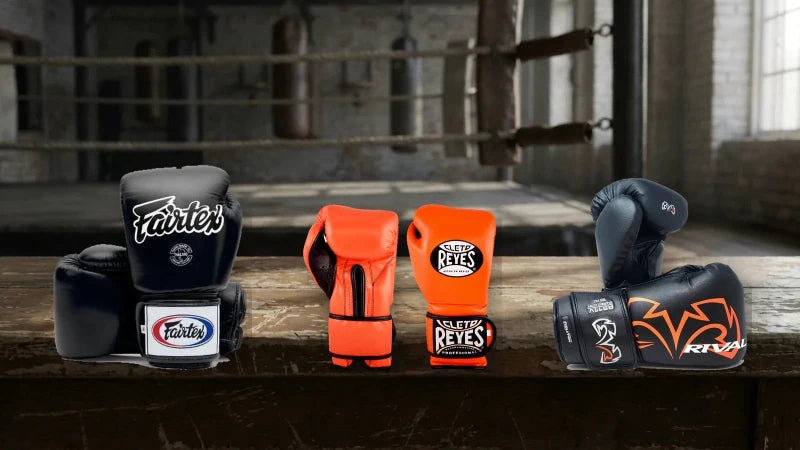
Choose boxing or Muay Thai gloves by the session first. Bags, pads, sparring and sanctioned competition are different jobs. After that, check the exact model's wrapped-hand fit, ounce options, cuff, padding feel, material and closure.
| Your main session | Start with | Do not assume |
|---|---|---|
| Bags and pads | A training or bag-oriented glove with stable wrist fit | That the densest glove is right for sparring |
| Mixed Muay Thai training | A compact all-round glove with enough wrist mobility for your gym | That every Thai-style glove fits the same |
| Regular sparring | Your coach's required weight and a partner-approved padding profile | That any 16 oz glove is suitable |
| Sanctioned competition | The exact glove and weight approved by the event or commission | That a retail “fight glove” is automatically legal |
1. Name the job before the brand
A first glove can cover bags, pads and general class work when the coach approves it. Regular sparring often deserves a separate pair so bag wear does not follow you into partner rounds. Competition is controlled by the event; the professional fight and training glove guide explains why those models are not interchangeable.
- Mixed training: start with an all-round model such as the Fairtex BGV1.
- Dense bag and pad feedback: compare the Fairtex BGV9.
- Microfiber and a longer wrist section: consider the Fairtex BGV14.
- Sparring-oriented feel: ask your coach about the TWINS Special BGVL-3.
- Premium cowhide, Thai-made construction: compare the YOKKAO Matrix.
Those are routes, not universal winners. The current Muay Thai glove comparison gives the detailed choose-or-skip decision for each.
For a boxing-led alternative, read the Cleto Reyes boxing glove review. If Fairtex is the shortlist, start with the Fairtex boxing glove review for the fit and value question, then use the current Fairtex glove selector for model-level differences.
2. Boxing gloves vs Muay Thai gloves
Both enclose the fingers; Muay Thai gloves are not open-finger MMA gloves. Thai-style models often use a shorter, more mobile cuff and a palm that is easier to open for clinch work. Boxing-led models often prioritize a more structured wrist and punch-only hand position. These are tendencies, not a guarantee across every brand.
If you switch between the sports, the exact model matters more than its category label. Read Muay Thai vs boxing gloves for the five practical design differences.
3. Choose the glove weight
Ounces describe glove weight, not hand size. Eight-ounce and 10 oz gloves can be used in regulated professional boxing, while 12 oz, 14 oz and 16 oz are common training routes. Many gyms begin adult sparring at 16 oz, but the coach, athlete, partner, model and glove condition decide.
Do not buy from a universal body-weight table. Use the boxing glove weight guide, then confirm the answer with your gym. For a child, use the kids' boxing glove sizing guide instead of shrinking an adult chart.
4. Check fit over wraps
The glove should stay secure without crushing your fingertips or pulling your thumb sideways. You should be able to form a natural fist. The closure should hold the wrist without numbness or a large gap.
Ounce weight does not standardize the hand compartment. The BGV1 is compact; the BGV19 is intentionally tight; TWINS BGVL-3 has a higher-volume feel but is not guaranteed to be roomy for every hand. If you have a narrow or low-volume hand, use the smaller-hand boxing glove fit guide rather than shopping by gender label alone.
5. Compare cuff and closure
Hook-and-loop
Fast to put on without help and practical for normal classes. Check that the strap secures your wrist and that no rough hook section can touch a sparring partner.
Lace-up
Offers a close adjustable fit but normally needs a second person or lace converters. It makes sense for coached competition or a dedicated setup, not because laces are automatically better.
Short vs long cuff
A compact Thai cuff can support wrist movement for clinch work. A longer boxing-style cuff can feel more structured. Neither fixes poor alignment or the wrong hand compartment. If you want names, colors or artwork, read the safe boxing glove customization guide before altering the closure or training surface.
6. Choose leather, microfiber or another synthetic
Genuine leather is a construction choice, not a durability guarantee. Microfiber is not the same as entry vinyl, and modern synthetic shells vary widely. The BGV1 and BGV9 are leather; the BGV14 is microfiber; YOKKAO Matrix is cowhide.
Use the leather vs microfiber vs synthetic guide for care, feel and value tradeoffs. If environmental claims affect the purchase, compare only verified lower-impact boxing glove materials rather than broad “green” labels.
For foam density, shape and bag-versus-sparring feel, use the boxing glove padding guide. Ounces do not describe that system.
7. Decide whether you need one pair or two
A beginner doing bags and pads can start with one coach-approved pair. Once sparring becomes regular, a dedicated partner-work glove is the cleaner setup. A competitor may also use event-controlled fight gloves, which are separate from daily training equipment.
First-pair decision
- Ask the coach whether the class uses bags, pads, sparring or all three.
- Get the required ounce weight.
- Choose hook-and-loop unless your setup has a reason for laces.
- Try the exact model over your wraps.
- Reject numbness, bad thumb position or a closure that cannot secure the wrist.
The beginner boxing glove guide turns that sequence into a short first-purchase decision tree. After buying, follow the boxing glove cleaning guide and the safe break-in process.
Browse the current boxing and Muay Thai glove collection only after the job, weight and fit are clear.
What you are actually feeling inside the glove
A glove is a small system: shell, foam, hand compartment, thumb, grip bar, lining, cuff and closure. Change one part and the whole glove can feel different. A longer cuff may feel structured, but it cannot rescue a hand compartment that lets your fist swim. Soft foam may feel friendly at first squeeze, but the coach still needs to approve it for partner work.
The useful test is not “Does this feel premium?” It is “Can I form a clean fist, keep my wrist where I want it and use this glove for the session it is meant to do?” That question cuts through most brand noise.
One pair can start the job. Two pairs can protect it.
For a new student, one coach-approved training pair often covers bags, pads and technical class work. The split becomes useful when sparring is regular. Bag rounds flatten and harden the contact surface over time; your partner should not inherit that wear.
A sensible two-pair setup is simple:
- Bag and pad pair: chosen for feedback, wrist fit and durability under repeated strikes.
- Sparring pair: kept clean, inspected often and approved by the coach for partner rounds.
Competition gloves sit outside that setup. The event or commission controls the model, weight and inspection. A product name that includes “pro” or “fight” is not permission to bring it to a bout.
Try the glove like you will train in it
- Wrap both hands with your normal wrap length.
- Put on both gloves; one hand is often slightly larger.
- Close the strap the way you can manage between rounds.
- Make a fist, open the hand and check the thumb position.
- Hold a guard for a minute. Notice pressure, slipping and wrist gaps.
- Reject numbness, sharp seams and a fist that never closes naturally.
Then care for the pair you chose. Take it out of the gym bag, wipe it down and let it dry after every session. That routine matters more than a glossy material label.