


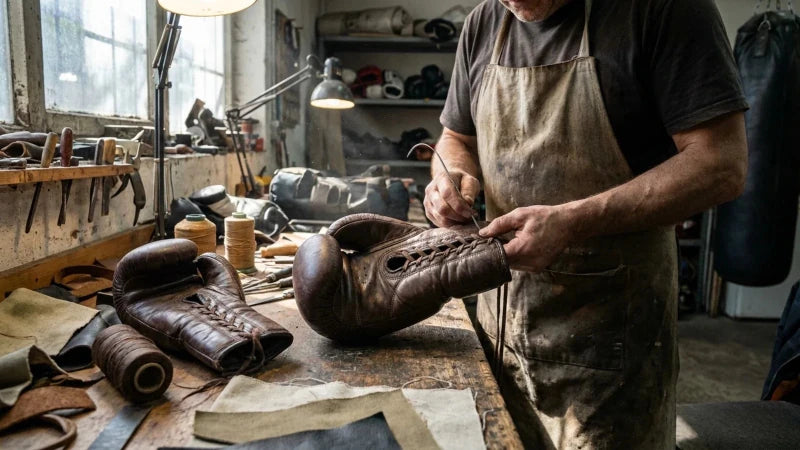
“Eco-friendly boxing gloves” is too broad to trust without evidence. A useful claim names the exact material, the percentage used, the part of the glove it applies to and the basis for saying it reduces impact. “Vegan,” “plant-based,” “recyclable” and “biodegradable” each mean something different.
Among the current MMA Warehouse glove pages reviewed for this update, we did not find a complete product-level lifecycle assessment or independent certification that proves one boxing glove is the lowest-impact choice. That means this page should teach verification, not invent a green winner.
| Claim | What it proves | What it does not prove |
|---|---|---|
| Non-leather or vegan | No animal leather in the declared shell | Lower carbon, less plastic or biodegradability |
| Recycled content | A stated share came from recovered material | That the whole glove is recycled or recyclable |
| Plant-based material | Some feedstock comes from plants | That coatings, foam and adhesives are plant-based |
| Recyclable | Potential recovery in an available system | That mixed-material gloves are accepted locally |
| Biodegradable | Requires evidence for the whole product and disposal route | That it will break down in a landfill |
Why the old “sustainable picks” list was not credible
The previous article named cactus leather, hemp, cork padding, organic cotton, recycled foam and biodegradable components without current product evidence. It also assigned carbon footprints, decomposition times, prices and lifespans with no citations. Those numbers are removed.
The US Federal Trade Commission says marketers should not make broad, unqualified claims such as “green” or “eco-friendly.” Its Green Guides summary calls for clear, specific qualifications and evidence for express and implied claims.
What to ask before buying
- What is the shell? “Synthetic” is not enough; look for microfiber, PU, vinyl or a named composite.
- What percentage is claimed? A recycled lining does not make the whole glove recycled.
- Which component does the claim cover? Shell, lining, foam, thread, adhesive and packaging are separate.
- What is the comparison? “Lower impact” needs a baseline and method.
- Can it be repaired or recycled? Ask for a real take-back or repair route, not a recycling symbol alone.
- Will it do the training job? A material story cannot rescue wrong fit or padding.
Non-leather options in the current range
The Fairtex BGV14 uses microfiber. The YOKKAO Essential also uses microfiber. These are verified non-leather shell choices from the manufacturers' current pages.
Neither “microfiber” statement, by itself, proves a lower product-level environmental footprint than cowhide. Microfiber is still an engineered material, and a boxing glove combines foam, lining, thread, closure and adhesives. Choose these models for their declared construction and training role, not an environmental benefit the maker has not established.
Does leather automatically lose?
No. Leather has animal-agriculture and tanning impacts; synthetic shells can rely on fossil-based polymers and mixed materials. Without comparable lifecycle data, a blanket winner is marketing, not analysis. A glove that fits, gets used, is maintained and is replaced only when unserviceable can be a more defensible purchase than repeatedly buying the wrong “green” glove.
Packaging is not the product
Recycled cardboard, reduced plastic or compact shipping can be useful packaging facts. They do not establish the footprint of the glove itself. Check whether a claim applies to packaging, one component or the complete product before comparing it.
Durability is useful, but do not invent it
Keeping a serviceable glove in use can reduce replacement demand. But no honest editor can promise that one material lasts 30% longer or adds a fixed number of months. Construction, training frequency, sweat, bag work, storage and padding condition all matter.
Use the leather vs synthetic boxing glove guide for material tradeoffs and the boxing glove care guide to avoid premature damage.
A defensible lower-impact buying hierarchy
- Use the serviceable gloves you already own
- Buy the right model once instead of replacing a bad fit
- Prefer specific, quantified material claims over green labels
- Ask whether repair, replacement parts or take-back exists
- Dry and inspect gloves so avoidable damage does not end their use
- Do not keep structurally unsafe gloves merely to avoid disposal
Use the boxing and Muay Thai glove buying guide to settle the training job and fit, then compare the current glove range by disclosed material. No product in this article is awarded an unsupported “most sustainable” badge.
“Vegan,” “synthetic” and “sustainable” are not synonyms
A non-leather shell answers one question: it is not animal leather. It does not tell you the feedstock, factory energy, solvent system, working conditions, repair options or end-of-life path. The same caution applies to leather. “Natural” is not a lifecycle assessment.
Ask for narrow facts you can check: exact shell material, recycled content by percentage, certification scope, country of manufacture, packaging composition and whether replacement parts or repairs exist. If the seller answers with a mood board, the claim is not ready.
Durability only helps when the glove still works
Keeping one functional pair longer can reduce replacement demand. But longevity is not a reason to train in collapsed foam, split seams or a closure that no longer holds. Inspect the glove as equipment, not as a virtue signal.
A practical lower-waste routine looks ordinary:
- Buy the correct model and fit so it does not become an early return or closet pair.
- Dry it after every session instead of leaving it damp in a zipped bag.
- Use the right glove for bags and sparring so one job does not destroy the other.
- Replace it when the safety function fails, not when a new color drops.
How to compare a current non-leather option
The Fairtex BGV14 gives you a specific microfiber construction to compare against leather models. That does not make it “eco-friendly” by default. It simply gives the material conversation a real product, a stated shell and a fit/use decision instead of a vague green label.