


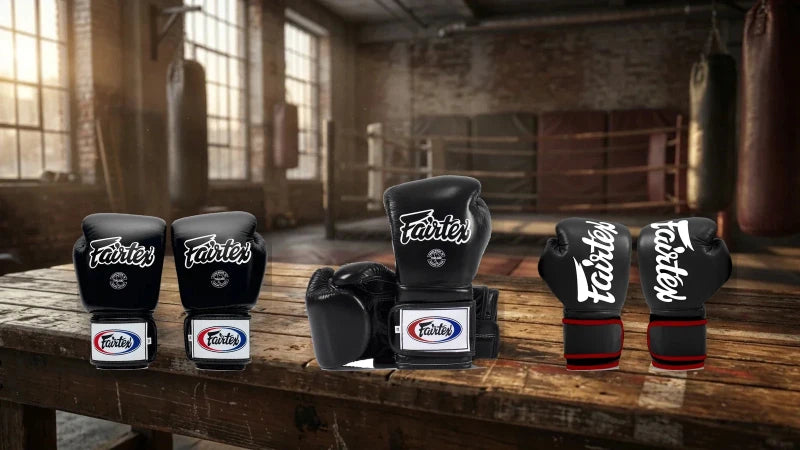
Fairtex model numbers look cryptic until you put them beside the job they were built to do. Then the choice gets much easier.
Start here: choose BGV1 for compact mixed training, BGV9 for dense bag and pad feedback, BGV14 for an easy-care microfiber glove with a longer wrist, or BGV19 for a tight fit with more knuckle padding. BGV1C-Plus is the microfiber evolution of the all-round BGV1 idea. BGV16 is the smaller-hand, short-cuff leather route.
Those are not rankings. They are different tools. If you are not committed to Fairtex, use the complete striking-glove guide to choose by session before comparing models.
Fairtex gloves comparison
| Model | Construction | Primary decision | Skip it if |
|---|---|---|---|
| BGV1 | Genuine leather; three-layer foam; compact contoured hand compartment | You want a mobile Thai-style all-rounder for bags, pads and mixed training | You need a roomy hand pocket or a deliberately soft sparring-first glove |
| BGV1C-Plus | Microfiber; redesigned inner compartment; high-flex foam | You want the all-round BGV1 idea in microfiber with easier fist closure | You specifically want a leather shell or a long, rigid cuff |
| BGV9 | Genuine leather; weighted padding; double high-density latex foam | Your main work is heavy bags, pads and targets | You are buying primarily for regular partner sparring |
| BGV14 | Microfiber shell and palm; longer wrist section | You want a light, easy-care general training glove | You want leather or assume every hand will find the same fit |
| BGV19 | Genuine leather; modified BGV1 shape; thicker, rounder knuckle padding | You want a tight compartment and more padding over the knuckles | You have large hands, thick wraps or dislike a deliberately tight fit |
| BGV16 | Genuine leather; short cuff; smaller hand-and-wrist geometry | You have smaller hands and want a compact leather glove | You need a roomier interior or longer wrist section |
Compare the Fairtex models
Open the exact model page for current colours, weights and availability.


Fairtex BGV1 vs BGV9
This is the comparison most buyers should settle first.
The BGV1 is Fairtex's general-training route. Its compact hand compartment and shorter Thai-style cuff suit pads, bags and mixed Muay Thai work. The BGV9 is more specialized: Fairtex gives it weighted padding and dense latex foam for heavy bags and targets.
Choose BGV1 if one glove needs to cover more of your week. Choose BGV9 if the bag is the main event and you deliberately want a firmer, denser response.
Do not turn that into “BGV1 for beginners, BGV9 for professionals.” Experience level does not decide the job. Training use does.
Fairtex BGV1 vs BGV14
Both are general-training options, but the material and geometry differ.
BGV1 uses genuine leather and has the compact Fairtex hand feel most people associate with the brand. BGV14 uses microfiber and has a longer wrist section. Fairtex describes BGV14 as soft, light and easy to care for.
Choose BGV1 for leather and the compact mixed-training benchmark. Choose BGV14 for microfiber, a longer wrist and a lower-maintenance surface. Neither model has a universal fit verdict; reports vary by hand shape, wraps and glove weight.
Fairtex BGV1 vs BGV1C-Plus
The BGV1C-Plus is not simply a BGV1 in a different color. Fairtex uses a microfiber shell, revised padding and a redesigned inner compartment intended to make fist closure easier and thumb positioning more natural.
Choose the leather BGV1 when the traditional shell and established compact shape lead the decision. Choose BGV1C-Plus when you want microfiber and the updated ergonomics. Do not buy either on a promise of a fixed break-in period or guaranteed fatigue reduction. Those outcomes vary by user and are not needed to make the choice.
Where BGV19 and BGV16 fit
BGV19: tight fit, thicker knuckle profile
BGV19 modifies the BGV1 architecture with a tighter hand compartment and thicker, rounder padding over the knuckles. That makes it a genuine alternative, not a simple upgrade.
It works for buyers who want that close fit and extra padding profile. It can be the wrong choice for large hands or thick wraps. Put it on with the wraps you actually train in before deciding.
BGV16: smaller hand and wrist geometry
Fairtex describes BGV16 as a leather glove designed around smaller hands and wrists, with a short cuff, grip bar and ventilation. That makes the fit proposition more useful than the old “women's glove” shortcut.
A product label cannot measure your hand. Use the wrapped-hand fit checks below.
How to choose Fairtex glove size and weight
Glove ounces measure glove weight. They do not measure the length or width of your hand.
- Ask your coach first. Your gym may require a specific weight for sparring. A competition organizer or sanctioning body may use different rules.
- Choose the training job. Bag, pad, mixed training and partner sparring create different padding requirements.
- Try the glove with your normal wraps. Your fingers should reach the finger pocket without curling awkwardly. Your thumb should sit naturally. The closure should secure the wrist without cutting circulation.
- Make a relaxed fist. You should not have to fight the glove to close your hand.
- Check both hands. Small left-to-right differences matter when the hand compartment is already compact.
If you need help separating training and competition weights, use the boxing glove weight guide. Your coach's rule overrides a generic internet chart.
Leather or microfiber?
Leather and microfiber both work when the construction suits the job.
- Choose leather when you want a natural hide shell and are willing to follow the maker's care instructions.
- Choose microfiber when easy surface care, consistent finish and a non-leather shell lead the decision.
Do not accept blanket promises that one material always lasts longer. Training frequency, bag surface, moisture, storage and care can outweigh the material label. Our leather versus synthetic glove guide explains the construction tradeoffs without invented lifespan math.
Best Fairtex glove by training use
- Mixed bags and pads: BGV1 or BGV1C-Plus.
- Heavy bags and dense feedback: BGV9.
- Microfiber general training: BGV14.
- Tight fit with more knuckle padding: BGV19.
- Smaller hands and shorter wrist geometry: BGV16.
For regular partner sparring, the model is only one part of the decision. Confirm the required weight with your coach, inspect the padding and closure, and make sure your partner and gym accept the glove. “Sparring safe” is not a permanent label.

Start with your actual training week
A glove comparison becomes useful when it describes your sessions, not your identity as a beginner or an advanced fighter. Write down what you will do over a normal week: heavy bag rounds, pad rounds, technical drilling and partner sparring. Then decide whether one glove genuinely needs to cover all of it.
If most sessions mix bags and pads, the compact BGV1 and microfiber BGV1C-Plus are the sensible first comparison. If your week is built around heavy bags and targets, compare those against the denser BGV9. If partner sparring is regular, ask the coach which weight and padding condition the gym accepts before buying. A product name cannot answer a gym rule.
Two-glove setups can make more sense than forcing one model into every job. A bag-focused glove can take repeated target work while a separate pair stays reserved for partner sessions. That is not mandatory, and it is not a reason to buy two pairs on day one. It is simply a cleaner decision when your training jobs pull in opposite directions.
How the six models separate in real use
BGV1 and BGV1C-Plus: same role, different route
Both sit in the mixed-training lane, but they should not be treated as interchangeable. BGV1 is the leather benchmark with the familiar compact Fairtex shape. BGV1C-Plus takes the all-round idea into microfiber and changes the inner construction. That makes the choice concrete: shell preference, wrapped-hand fit and how naturally the glove closes on your hand.
If leather matters and the BGV1 pocket suits you, the original is the direct choice. If you want microfiber or the BGV1 feels as though you have to fight it to close a relaxed fist, try BGV1C-Plus rather than assuming a longer break-in will solve the fit. Neither route is automatically more durable; moisture, storage, bag surface and care can matter as much as the material label.
BGV9: buy the specialization deliberately
BGV9 is the clearest specialist here. Its denser, weighted padding makes sense when firm bag and pad feedback is the point of the purchase. It is less convincing as a default answer to “Which Fairtex glove should I buy?” because many fighters need a broader weekly tool.
The practical test is simple. If you would be disappointed by a glove that feels firm and target-focused, skip BGV9. If that direct response is exactly what you want for heavy rounds, do not dilute the choice by asking it to be the softest partner-work option as well. Choose the job first, then confirm the weight with your gym.
BGV14: material and wrist geometry lead
BGV14 is for the buyer whose decision starts with microfiber and a longer wrist section. That can be useful compared with a shorter, more mobile Thai-style cuff, but it is not an objective upgrade. Some athletes want the extra wrist coverage; others want less structure when catching kicks, clinching or moving between drills.
Compare BGV14 directly with BGV1C-Plus if the non-leather shell is settled. Compare it with BGV1 if you are still deciding between material and cuff shape. The useful question is not “Which one is premium?” It is “Which construction lets me make a clean fist and secure my wrist without pressure points?”
BGV19 and BGV16: fit decisions before feature lists
BGV19 adds a rounder, thicker knuckle profile while keeping an intentionally close hand compartment. That suits someone who wants more padding over the knuckles and still likes a locked-in Fairtex fit. It is a poor blind buy for a large wrapped hand. More padding outside does not create more room inside.
BGV16 goes the other direction by making smaller hand-and-wrist geometry the main reason to consider it. Use that description as a fitting prompt, not a demographic label. A smaller hand may suit it; a wider palm or thick wrapping method may not. The glove still needs to be tried with the exact wraps used in training.
Run a wrapped-hand fit check
Do not judge a training glove with a bare hand if you normally wear wraps. Put on your usual wrap length and pattern, then check both gloves.
- Finger position: your fingers should reach the end of the pocket without being crushed or forced to curl early.
- Thumb position: the attached thumb should sit naturally instead of pulling the thumb outward or folding it inward.
- Fist closure: make a relaxed fist. The glove can feel structured, but it should not require constant effort just to stay closed.
- Wrist closure: secure the strap as you would for a round. Look for support without numbness, tingling or obvious pressure points.
- Left-to-right difference: fit both hands. A model acceptable on one hand can expose a small size difference on the other.
Then shadowbox for a minute and open and close the hand. A glove that rotates, blocks normal movement or creates sharp pressure is giving useful information. Do not translate every bad fit into “it just needs breaking in.”
Common Fairtex buying mistakes
- Buying by model popularity: a widely discussed model can still be wrong for your sessions or hand shape.
- Using ounces as hand size: ounces describe glove weight, not palm width or finger length.
- Choosing a sparring glove without the gym: the coach controls accepted weight and condition.
- Assuming leather always wins: material does not rescue the wrong fit or wrong training role.
- Reading availability into the article: confirm the exact color and weight on the live product page.
For a wider look at gloves, shin guards and coach equipment, read the Fairtex gear review. If you are comparing brands rather than Fairtex models, use the Fairtex vs YOKKAO vs Twins guide.
Before you buy
- Check the exact color and weight on the live product page.
- Treat temporarily out-of-stock variants as unavailable today, not discontinued.
- Do not substitute a different glove weight just because the preferred one is sold out.
- Use wraps when testing fit.
- Read the glove care guide before putting leather conditioner, disinfectant or heat on a new glove.
Still deciding between brands? The Fairtex vs YOKKAO vs Twins guide compares the larger systems. For the broad quality and value question, read our Fairtex boxing gloves review.