


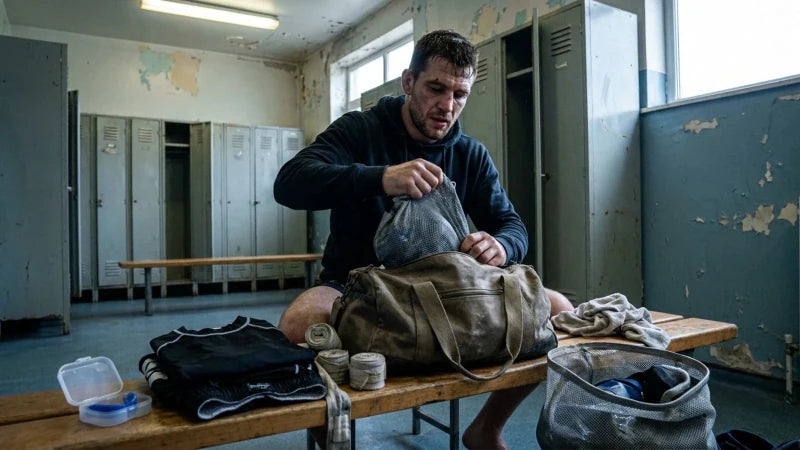
The cleanest combat-sports bag uses three zones: clean gear, dry training gear and wet or dirty gear. The rule is simple: nothing sweaty stays sealed in the bag after you get home.
Organization is not about folding everything perfectly. It is about arriving with the required kit, finding it quickly and stopping moisture from spreading through the bag. Use the combat-sport gear guide by discipline to decide what belongs on the list before assigning each item a zone.
The three-zone system
| Zone | Put here | Do not do |
|---|---|---|
| Clean | Fresh clothes, towel, tape and personal items in a clean pouch | Let shoes, wraps or used mouthguards touch it |
| Training | Gloves, guards, belt and equipment needed for today’s class | Carry every piece of gear you own by default |
| Wet or dirty | Used wraps, rash guard, shorts and towel in a washable wet bag | Leave the closed wet bag inside the gym bag overnight |
Add one small personal-contact container for a mouthguard and any dental appliance. Clean and dry both before storage.
Pack by session, not by sport identity
Boxing
- Gloves required for the session
- Clean hand wraps
- Mouthguard for partner work
- Headgear and groin or chest protection if the gym requires them
- Water and a clean change of clothing
Muay Thai or kickboxing
- Gloves, wraps and mouthguard
- Shin guards for the specified drill or sparring class
- Any coach-required groin, chest, head or elbow protection
- Towel, water and change of clothing
BJJ or no-gi
- Academy-approved gi and belt, or no-gi rash guard and shorts
- Sandals for walking off the mat
- Water, towel and a dry change
- Mouthguard or ear guard if personally used
The essential training-gear guide and no-gi checklist give the full sport-specific decisions.
Choose a bag by layout
Litres are not standardized enough to settle the choice alone. Put your bulkiest required items together—usually gloves, shin guards or a gi—and check the actual bag dimensions.
| Feature | Worth paying attention to |
|---|---|
| Opening | A wide top or clamshell opening makes small items and the bottom visible |
| Ventilation | Useful during transport, but not a substitute for emptying the bag |
| Wet pocket | Helpful only if it can be cleaned and you still unload it immediately |
| Shoe compartment | Keeps soles separate, but can steal space from gloves or guards |
| Washable lining | Makes sweat and spills easier to manage |
| Straps and handles | Must suit the weight and distance you actually carry |
Use the live gym-bag collection to compare current shapes and dimensions. Do not buy a huge bag to solve a packing problem; dead space encourages permanent storage of damp gear.
The two-minute post-training reset
- Take out the wet bag, mouthguard, wraps, clothing, towel, gloves and guards.
- Wash clothing and wraps according to their labels.
- Clean personal gear with a material-compatible product.
- Open closures and air dry everything away from direct heat.
- Wipe the bag lining and leave every compartment open until dry.
- Repack only clean, dry gear for the next scheduled session.
The CDC’s athlete guidance supports washing and drying clothing after use, cleaning personal gear, showering after exercise and not sharing personal items. Our protective-gear care guide covers material and condition checks.
What stays out of the bag
- Loose liquids that can leak into gloves or electronics
- Uncovered blades, tools, glass or hard sharp objects
- Food left between sessions
- Damp gear from the previous class
- Medication or valuables that require different storage and security
A repeatable packing checklist
Keep a note on the bag or phone with four headings: class gear, protection, hygiene and after-class clothing. Update it when the schedule changes. A small reliable checklist beats a forty-item “ultimate bag” list you never use.
Test the layout before you buy the bag
Put the actual session load on the floor: both gloves, both shin guards, uniform, clean clothes, towel, bottle and the small items you cannot forget. Measure that pile and compare it with the bag's internal dimensions. A litre figure is only a rough comparison because pockets, curves and dividers change how much usable space remains.
Look for an opening wide enough to reach the bottom without unloading everything. A separate shoe or wet compartment helps only when it can be cleaned and left open to dry. Tiny organizer pockets are useful for tape, keys and a mouthguard case; they do not compensate for a main compartment that crushes gloves or forces damp gear against clean clothes.
Pack bulky gear without turning the bag into storage
Gloves and shin guards should go in dry and come out after the session. Do not stuff wraps inside gloves for the ride home; that traps the wettest fabric in the hardest place to dry. Use the hollow of each shin guard for light, clean items only on the way to training, then separate everything after class.
A gi or wet rashguard can dominate the whole bag. Fold the clean uniform for the outward trip, then move it to a washable wet bag after training. The wet bag contains the mess until you get home; it is not where the clothing should spend the night.
Build a bag that is hard to forget
Keep stable items in stable places. Mouthguard case in the same quick-access pocket. Wraps in the same clean pouch. Tape and small care items together. Refill the water bottle and add the clean change just before leaving. This removes the daily search without leaving sweaty equipment packed for days.
For competition or travel, create a separate event checklist. Add only items the event requires: identification, approved uniform or glove, backup mouthguard, corner supplies and recovery clothing. Do not turn the everyday article into an airport, medical and tournament checklist at the same time.
Three bag problems and what they mean
- The bag smells again immediately: the equipment is being repacked before it is fully dry, or the lining itself needs cleaning.
- You cannot find small items: add one removable pouch instead of buying a larger bag.
- Clean clothing is damp: the wet zone is leaking or being overfilled. Change the liner, not the folding method.
Sources and rule checks
- CDC guidance for athletes: Clean personal gear, wash and dry clothing after use, shower after exercise, and do not share personal items.