


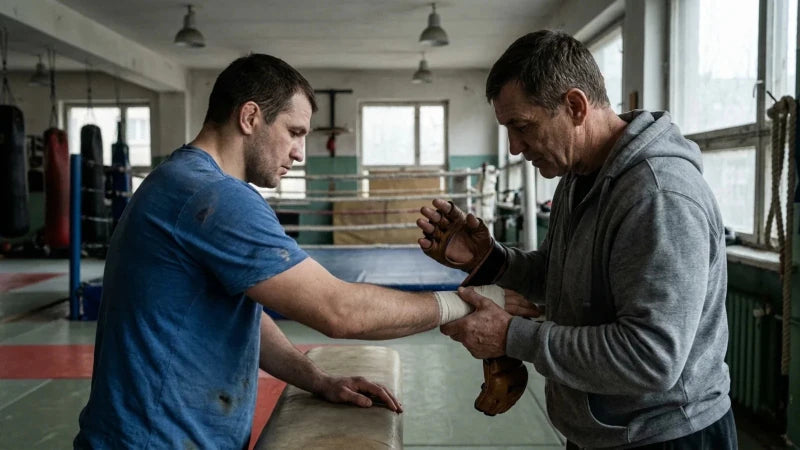
MMA gloves cannot prevent every hand or wrist injury. They cover part of the hand and change contact, but the result still depends on technique, wraps, target, training intensity, fit, glove condition and coach supervision. Stop for numbness, sharp pain, visible deformity, significant swelling or loss of normal motion.
| Check | Usable sign | Stop sign |
|---|---|---|
| Fit | Secure without crushing | Numbness, tingling or finger pressure |
| Padding | Centered and even | Hard spot, hollow or shifted foam |
| Closure | Holds through movement | Sliding, failed hook-and-loop or hard edge |
| Shell and seams | Closed and smooth | Tear, exposed foam or rough surface |
| After training | Normal temporary fatigue | Persistent pain, swelling or weakness |
What the injury evidence can and cannot say
A 2025 systematic review of MMA injuries found wide variation in study design, injury definitions and reported rates. It also noted important gaps in training-injury and female-athlete data. That makes precise promises about one glove preventing injury indefensible.
A clinical review of hand and wrist injuries in boxing and martial arts describes different injury mechanisms in striking and grappling and emphasizes technique and target selection alongside hand protection. Equipment is one layer, not immunity.
Choose the correct glove type
Competition, training and sparring gloves have different coverage and padding. A low-profile competition glove is not the normal route for routine partner sparring. An open-finger MMA glove is not the default for sustained heavy-bag power rounds. Use the model and intensity set by the coach.
The MMA glove types guide separates the three jobs. For sanctioned events, use the competition glove rules guide.
Fit the glove over the real wrap setup
- Measure using the exact model's size chart.
- Put on the wraps required for that class.
- Center padding over the knuckles.
- Make a fist and open the hand without forcing either position.
- Check each finger loop and thumb design for pressure.
- Secure the closure without numbness or sliding.
Letter sizes do not transfer reliably between brands. Break-in cannot fix the wrong hand geometry. If padding moves away from the striking area or the closure cannot secure the wrist, change the size or model.
Inspect the glove before partner work
- Press the padding for hard spots, hollows and asymmetry
- Check finger loops, thumb area and all seams
- Remove debris from the hook-and-loop closure
- Confirm no rough edge can contact a partner
- Retire any glove with exposed or displaced foam
- Ask the coach to approve the exact model and condition
Technique and training load still matter
Keep the wrist and fist position the coach teaches, build impact gradually and use the target intended for the drill. Fatigue can degrade mechanics. A premium material, longer strap or thicker label does not compensate for uncontrolled intensity.
Do not use pain as a break-in signal. Stop the session if symptoms are sharp, worsening or affect normal grip and motion. Significant trauma or persistent symptoms need assessment by a qualified health professional; an article or product page cannot diagnose the problem.
Do not train through a glove-related pressure point
Finger-loop rubbing, a pinched thumb or a hard closure edge can worsen as the session continues. Rewrap and refit once. If the problem remains, change the size or model. Heat, oils and forced bending are not solutions.
After an impact, inspect the hand and the equipment
If symptoms appear after a strike or grappling exchange, stop using the glove until the hand can move normally and the equipment is checked. Look for shifted foam, torn loops and closure failure. Do not return a damaged glove to partner work.
Hand wraps are not one-size-fits-all
Wrap style depends on the class, glove space and event rules. More wrap is not automatically better if it crowds the glove and shifts padding. Have the coach teach the setup and recheck glove fit after any change.
Care preserves condition; it does not restore failed foam
After every session, remove wraps, wipe the glove, open the closure and air-dry it fully. Follow the MMA glove care guide. Cleaning can control sweat and surface soil; it cannot restore compressed padding, torn seams or a failed strap.
Compare coach-approved options in the MMA glove use-case ranking or current MMA glove collection.
Most glove problems announce themselves before they become dramatic
Numb fingertips, a pulling thumb, a hot spot over one knuckle or a closure that shifts are early warnings. They may come from fit, wrapping, wear or technique. None should be normalized as “part of breaking in the glove.”
Stop the round, remove the glove and compare both hands. Check the wrap for a ridge, inspect the lining and look for uneven padding. If pain or altered sensation remains, do not put the glove back on and keep testing it.
Partner work adds a second person's risk
- Check for exposed hook material and rough edges.
- Press the knuckle pad for hard or flat areas.
- Make sure the finger loops and thumb are intact.
- Ask the coach to approve competition-style gloves before any controlled MMA sparring.
A glove can be comfortable for the wearer and still be wrong for the partner. Condition and session matter as much as the label.
The glove is not the whole safety system
Technique, intensity, fatigue, wrap choice, coaching and recovery all change the load on the hand. More padding does not grant permission to hit harder, and a new glove does not make a poor wrist position disappear.
After a significant impact, visible deformity, severe swelling, loss of movement or persistent pain needs qualified medical assessment. Equipment advice should not delay care.