


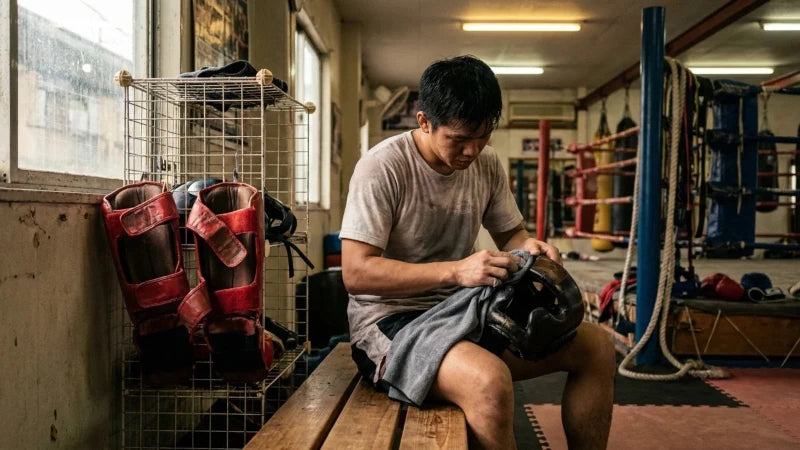
The best gear-cleaning routine starts before you leave the gym: separate wet items, open every closure and do not let sweat sit in a zipped bag overnight.
You do not need a shelf of harsh chemicals. You need airflow, material-safe cleaning and regular inspection. If you are still building the kit rather than maintaining it, start with the essential training gear guide.
The ten-minute post-training reset
- Take wraps, clothing and towels out of the bag.
- Open gloves, headgear, shin guards and pad straps.
- Wipe visible sweat and soil from non-washable surfaces.
- Place washable items in a separate laundry bag.
- Air structured gear in a shaded, ventilated space.
- Leave the gym bag open until it is dry.
The CDC’s athlete hygiene guidance recommends washing and fully drying uniforms, towels and clothing after each use, avoiding shared personal items and following product labels.
Clean by material, not by guesswork
| Item | Routine | Avoid |
|---|---|---|
| Leather or microfiber gloves and pads | Wipe with a soft, lightly damp cloth; use only a cleaner the maker approves; air dry | Soaking, washing machines, radiators, hair dryers and direct sun |
| Synthetic shin guards and headgear | Wipe contact surfaces and straps; remove and wash liners only if the label allows | Bleach, strong solvents and submerging fixed foam |
| Hand wraps and fabric sleeves | Close hook-and-loop, use a mesh bag, follow the wash label and dry completely | Repacking damp or using fabric treatment the label forbids |
| Mouthguard | Rinse after use, brush gently as directed and store dry in a ventilated case | Boiling after fitting, hot cars and closed wet cases |
| Gi, rash guard and shorts | Wash after training according to the garment label | Leaving sweaty fabric against other gear |
“Antibacterial” is not automatically material-safe. Read both the gear instructions and the cleaner label. Test a small hidden area when the maker permits it.
Gloves, mitts and pads
Moisture sits deepest inside hand compartments. Pull wraps out immediately and open the cuff. Wipe the shell, palm and closures, then let the equipment dry with space around it. Never solve odor by adding fragrance to wet gear.
For gloves, see the separate boxing-glove care guide. For shared focus mitts and Thai pads, wipe between users when practical and follow the gym’s hygiene policy.
Headgear and shin guards
Pay attention to the areas that touch skin: brow, cheeks, ears, chin, instep, inner shin and straps. If a liner is removable and labeled washable, clean it separately. If not, keep water away from the foam core and use the maker’s surface-care method.
Airflow matters more than a sealed storage bin. Keep hook-and-loop away from delicate lining so it does not chew the fabric.
What to inspect while you clean
- Padding: permanent flat spots, lumps, movement or separation.
- Shell: cracks, tears, peeling or exposed hard edges.
- Stitching: open seams, especially near handles and straps.
- Closures: hook-and-loop that releases, stretched elastic, damaged buckles or loose laces.
- Fit: gear that has started rotating or sliding in normal movement.
- Hygiene: visible mold or an odor that returns after correct cleaning and full drying.
Replace based on lost function, damage and manufacturer guidance. A fixed “every six months” rule ignores training volume, materials, storage and impact history.
Pack clean and dirty gear separately
Use one zone for clean clothes and personal items, one for dry training equipment and one washable or water-resistant bag for wet clothing. The dirty zone is for transport, not storage. Empty it at home.
Our combat-sport gym-bag guide gives sport-specific packing lists. If the current bag cannot separate damp gear or open wide enough to dry, compare gym bags by layout rather than logo.
A simple maintenance rhythm
- After every session: empty, wipe, wash and dry as the item requires.
- Before every session: check fit, padding, seams and closures.
- When visibly dirty: use the item-specific deeper-cleaning instructions.
- After blood or an open-wound exposure: stop sharing the item and follow the gym’s blood and disinfection protocol.
- When function changes: repair only if the maker permits it; otherwise replace.
Need to replace a worn item? Start from the correct category—headgear, shin guards or focus mitts—and recheck fit instead of buying the same label on autopilot.
A material-by-material care map
| Equipment | After training | Avoid |
|---|---|---|
| Leather gloves and pads | Wipe the shell and high-contact areas with a maker-compatible method; open and air dry. | Soaking, radiators, hair dryers and unverified household treatments. |
| Microfiber or synthetic shells | Follow the product label, wipe sweat and let the interior dry fully. | Assuming every synthetic material tolerates the same cleaner. |
| Washable wraps and clothing | Wash after use, secure hook-and-loop and dry completely before storage. | Rolling damp fabric or leaving it inside gloves. |
| Headgear and shin guards | Clean skin-contact surfaces, open straps and inspect liners and seams. | Flooding a fixed foam core or closing the item while damp. |
| Mouthguards | Rinse, clean as directed, dry and store in a ventilated case. | Hot cars, direct heat, pets and shared use. |
Odor is a diagnostic, not a fragrance problem
Strong odor usually means moisture stayed trapped, a washable item was not washed, the bag lining is contaminated or an interior is no longer drying fully. Adding deodorizer to wet equipment covers the signal without solving the cause.
Clean the bag as well as the gear. Remove every loose item, follow the bag's care label, wipe compartments and leave them open until fully dry. If odor returns immediately after correct cleaning, inspect hidden foam, liners and seams for damage or contamination.
Shared gym equipment needs ownership
A shared pair of mitts or Thai pads will not maintain itself. Assign a clear after-class routine and a person responsible for checking handles, straps and strike faces. Keep clean and used equipment separate. If an item is exposed to blood or a draining wound, remove it from circulation and follow the gym's disinfection protocol.
Do not repair load-bearing handles or closures with improvised tape and put the item straight back into hard rounds. A temporary cover can hide the failure rather than restore the function. Repair only when the manufacturer or a qualified service path supports it.
What should trigger replacement?
Replace when the equipment cannot perform its job: the glove closure releases, padding shifts or develops a hard bottom, a shin guard rotates despite correct fit, a headguard will not stay centered, or a pad handle begins separating from the body. Cosmetic wear alone is not always retirement; structural failure is.
Sources and rule checks
- CDC guidance for athletes: Clean personal gear, wash and dry clothing after use, shower after exercise, and do not share personal items.