


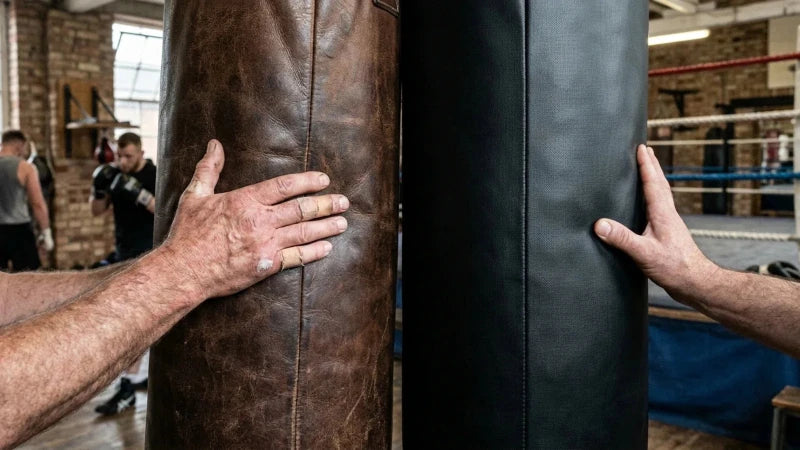
Leather is not automatically better, and synthetic is not automatically cheap. The shell matters, but so do the lining, seams, straps, fill and how the bag is stored.
For most home gyms, a well-built synthetic bag is the practical choice. Leather becomes more attractive when you value its surface feel, accept regular care and can keep the bag in a controlled indoor environment.
Use our complete heavy bag guide to choose the bag shape first. Material is the second decision, not the first.
Leather vs synthetic at a glance
| Factor | Genuine leather | Synthetic leather or microfiber |
|---|---|---|
| Surface | Natural hide with variation that changes as it ages | Engineered for consistent finish and easier cleaning |
| Care | Needs drying, gentle cleaning and product-compatible conditioning | Usually wipe-clean; follow the maker's instructions |
| Humidity | Less forgiving of damp storage and repeated moisture | Often more practical in humid or mixed-use spaces |
| Price | Usually higher when the bag uses full leather construction | Ranges from budget vinyl to premium microfiber |
| Consistency | Natural variation between hides | More uniform surface from bag to bag |
| Best buyer | Dedicated indoor user who values leather feel and will maintain it | Home or commercial user who wants low-fuss care and strong value |
First, separate the shell from the whole bag
A leather shell does not tell you how the bag is filled, how the seams are reinforced or whether the straps will survive the room. A synthetic shell does not tell you whether the bag is budget vinyl or premium microfiber.
Those differences can outweigh the material label:
- Uneven fill creates hard and soft spots in either shell.
- Poor stitching can fail before the surface material wears out.
- A bad mount can damage the bag and the building.
- Damp storage can shorten the useful life of any bag.
What current premium synthetic bags look like
The current Fairtex HB6 uses Fairtex's Syntex synthetic leather and high-density padding on the official product. YOKKAO's current heavy bag uses premium microfiber leather with reinforced stitching.
The live Fairtex HB6 and YOKKAO Heavy Bag show why “synthetic” is not one quality level: the exact shell, seams, lining and fill plan still have to be compared.
When leather makes sense
Choose genuine leather when you like the natural surface, will train indoors, and are willing to keep the bag dry and condition it with a product approved for that leather.
Leather can be an excellent commercial-gym choice, but only when maintenance is part of the operation. A premium bag left against a damp wall is not a premium decision.
When synthetic makes more sense
Choose synthetic when you want straightforward cleaning, a lower total cost or better tolerance for a garage-style environment. Microfiber and branded synthetic leathers can also deliver a premium finish without animal hide.
Outdoor use still needs caution. “Water-resistant” is not the same as weatherproof. UV, temperature changes, standing water and damp fill can damage the bag even when the shell wipes clean.
How the material changes care
Leather
- Wipe sweat with a soft, lightly damp cloth.
- Dry the surface completely with airflow, away from heaters and harsh sun.
- Use only a leather cleaner or conditioner compatible with the maker's instructions.
- Inspect for dryness, cracking, loose seams and dye transfer.
Synthetic leather and microfiber
- Wipe the bag after training with a soft cloth.
- Use a mild, material-compatible cleaner only when needed.
- Avoid soaking seams or allowing liquid into the fill.
- Inspect high-contact zones and strap attachments.
See the full punching bag cleaning guide for material-specific steps.
How to choose
- Choose leather for a controlled indoor space, natural feel and a maintenance routine you will actually follow.
- Choose premium synthetic for daily practicality, consistent finish and strong value.
- Choose by construction when two bags use similar shell materials: seams, lining, straps, shape and fill plan should decide.
Compare the current punching bag collection by exact material and construction. Do not rely on a generic “leather look” photo.
Not all synthetic shells belong in one bucket
Budget vinyl, branded synthetic leather and premium microfiber can all appear under a broad “synthetic” label. Their surface thickness, backing, flexibility and repair options differ. Treating them as interchangeable is as unhelpful as treating every genuine leather grade as the same.
When a product page names only “synthetic leather,” look for the missing construction details: lining, seam reinforcement, strap attachment, whether the bag is filled and the care instructions. If those are absent, the material label is doing more work than the evidence.
How the choice feels over ownership
Leather asks for a steadier environment and a care routine. The reward is a natural surface that changes with use. That appeals to some gym owners and means little to a home user who mainly wants a bag that can be wiped down after a late session.
Premium synthetic shells trade the romance of hide for consistency and easier day-to-day care. They can be the better premium choice in a busy gym because staff are more likely to follow a simple routine. The best material is the one the room and owner will maintain correctly.
Use this order when comparing two bags
- Choose the shape that fits the strikes.
- Confirm the finished size, fill state and mounting system.
- Compare seams, lining and attachment points.
- Choose the shell that suits the environment and care routine.
- Check current stock, return terms and replacement-part support.
Material belongs in the decision. It simply should not lead it.
Frequently asked questions
Does leather last longer than synthetic?
It can, but there is no honest universal lifespan. Quality, use, humidity, cleaning, fill and construction all change the result.
Is microfiber real leather?
No. Microfiber leather is synthetic. It may be premium and durable, but it should not be described as genuine hide.
Which is better for a garage gym?
Synthetic is usually easier to live with, but the room still needs to stay dry and protected from extreme temperatures and direct weather.
Does shell material change impact absorption?
Somewhat, but fill density and internal construction usually have a larger effect on how hard or forgiving the bag feels.